In This Article
- Why your toddler refuses milk from a sippy cup
- 7 ways to transition from bottle to sippy cup
If your toddler will happily drink water from a sippy cup yet demands milk only from a bottle, you did not screw it over; you are simply dealing with something extremely common: not a “bad habit” in the moral sense, but a powerful association
(milk = comfort + bottle = familiar mechanics). Parenting forums and mom blogs are full of near-identical stories -water is fine, milk is a battle- because the pattern is genuinely widespread.
We offer you a practical, low-drama plan built around what child-health guidance recommends (introducing cups from around 6 months and discouraging bottles after age 1), plus the real-world strategies parents repeatedly report using.
3 reasons why your toddler refuses milk from a sippy cup
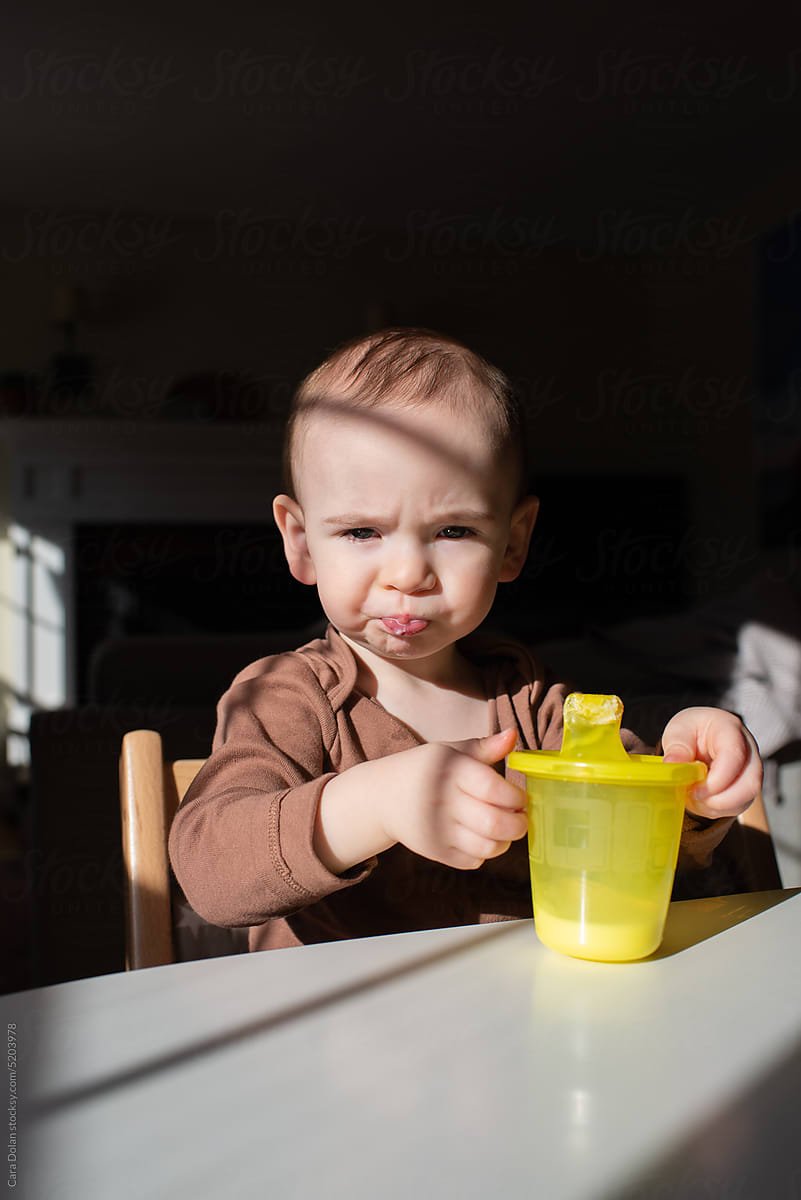
There are countless posts on communities for parents and moms saying, “My LO drinks water in a cup, but milk has to be in a bottle”. They’re describing a very common split: water is functional; milk is emotional.
Here’s what’s usually going on:
1. Milk is tied to comfort routines.
Many toddlers associate milk with regulation (bedtime, cuddling, calming down), and the bottle is part of that ritual. Parent-facing pediatric sources describe milk-from-cup protest as a typical, short-term phase for many kids. It’s a natural thing!
2. Sippy cup physics can be… rude.
Bottles deliver a predictable flow and familiar mouth pattern. Sippy cups require more effort. If your child has to work harder to suck the rich texture and loses the comfort association, refusal makes sense.
3. Refusal got rewarded (accidentally)
If your toddler refuses the cup and the bottle reliably returns, their brain learns: refusal works. This is not ‘manipulation’, it’s basic reinforcement.
What the experts say about the bottle-to-cup transition
According to Dr. Jennifer Shu, the ideal transition begins around 6 months, and UCSF Benioff Children’s Hospital has stated in general, children can be weaned off the bottle around 12 to 18 months.
7 ways to transition from bottle to sippy cup
1. Start with the “least-emotional” bottle
(NOT the sacred bedtime one)
Don’t begin with the bedtime bottle if that’s the one your toddler clings to most. Start with the easiest bottle to replace (often mid-morning or lunchtime). The American Academy of Pediatrics guidance supports gradual bottle weaning and specifically calls out eliminating bottles at naps/bedtime as part of the process- meaning you can work up to those. Betime bottles have the energy of a family heirloom. Don’t start there unless you enjoy chaos!
2. Put milk in the cup early (avoid the “cups are for water” trap)
This is the big one. If cups are always for water, toddlers can become reluctant to drink milk from a cup later.
Funny-but-true: toddlers love rules they invented five minutes ago. “Milk goes in a bottle” becomes a constitutional amendment.
3. Adjust the milk temperature (yes, your toddler has “preferences” now)
Some toddlers accept slightly warmer milk from a cup because it feels closer to bottle comfort.
4. Feed very slowly
Treat this like a new skill, not a test of willpower. UCSF Benioff Children Hospital’s bottle-weaning guidance suggests helping your child hold the cup and tipping a small amount into their mouth —so start with just 1–2 ounces and keep it low-stakes. Sit your toddler upright, guide their hands, touch the rim to the lower lip, tip just enough for a sip, then pause so they control the pace. This “slow, baby-led” pace is consistent with clinical cup-feeding approaches and helps prevent coughing/dribbling that can make toddlers decide the cup is “bad.”
5. If milk refusal seems “physical,” don’t force it. Investigate.
If your toddler only refuses milk (or seems uncomfortable after it), consider whether milk is upsetting their stomach. Lactose intolerance typically appears later, but flags that children can learn the “milk makes me feel yucky” link and avoid it. In that case, the “cup battle” may be misdiagnosed. Also, make sure you’re not weaning your child during a relatively stressful time, such as when a new sibling has just arrived or when the family has just moved to a new house. Pick a relatively stress-free time to wean your child.
6. Replace comfort with comfort (not with “because I said so”)
If the bottle is emotional regulation, you cannot remove it and replace it with nothing except your nervous energy. AAP guidance literally recommends extra snuggles, songs, and bedtime stories during the transition.
7. Most importantly, be consistent and patient 🤎
Consistency and patience matter because toddlers learn through reinforcement: if refusing the cup occasionally results in the bottle coming back, that “refusal” behaviour gets strengthened and becomes more persistent over time (a basic principle in operant conditioning and reinforcement schedules). Encouragingly, structured bottle-weaning efforts in real families show that a clear, repeated plan can reduce bottle use—so the goal isn’t to “win” today, but to keep the pattern steady long enough for your child to accept the new normal.
To Wrap up...
At the end of the day, this is less about finding a “perfect” sippy cup and more about gently rewiring a routine that your toddler genuinely finds comforting. If you stay steady (same plan, same boundaries, low drama), you’re working with how learning actually happens: behaviour that’s intermittently “rewarded” (cup refusal that sometimes brings the bottle back) tends to stick around longer. And if you’re in the messy middle right now—where milk in a cup gets a single sip and then a full legal appeal—remember: progress is often measured in tiny wins that add up.
Key takeaways
- Your toddler refusing milk from a sippy cup is usually about comfort + habit + predictability, not “being difficult”.
- A gradual transition is normal: both AAP guidance describe offering a cup around 6 months and completing the transition roughly 12–18 months for many children.
- If milk is tied to soothing (especially bedtime), success often comes from replacing the comfort (snuggles/stories) rather than only swapping the container.
- Consistency matters because “sometimes the bottle comes back” can unintentionally reinforce refusal; steady routines reduce the battle over time.
Related post: Sippy Cup or Straw Cup First? Do You Even Need a Sippy Cup?
Sources
- UCSF Benioff Children’s Hospitals, “FAQ: Baby Bottle Weaning”
- Family Health Service Department of Health, “My baby refuses to drink from a cup”
- The American Academy of Pediatrics, “From Bottle to Cup: Helping Your Child Make a Healthy Transition”
- HealthPark Pediatrics, “When and how to help your baby switch from bottle to cup”
- Parents, “Why Your Toddler Won’t Drink Milk from a Sippy Cup and What to do”